Traveling with celiac disease can feel overwhelming, but with a little prep, it’s 100% doable.
Before you go
- Research naturally gluten-free dishes in the local cuisine (example: Ugali in East Africa).
- Learn essential phrases like “I’m celiac” and “gluten free” in the local language.
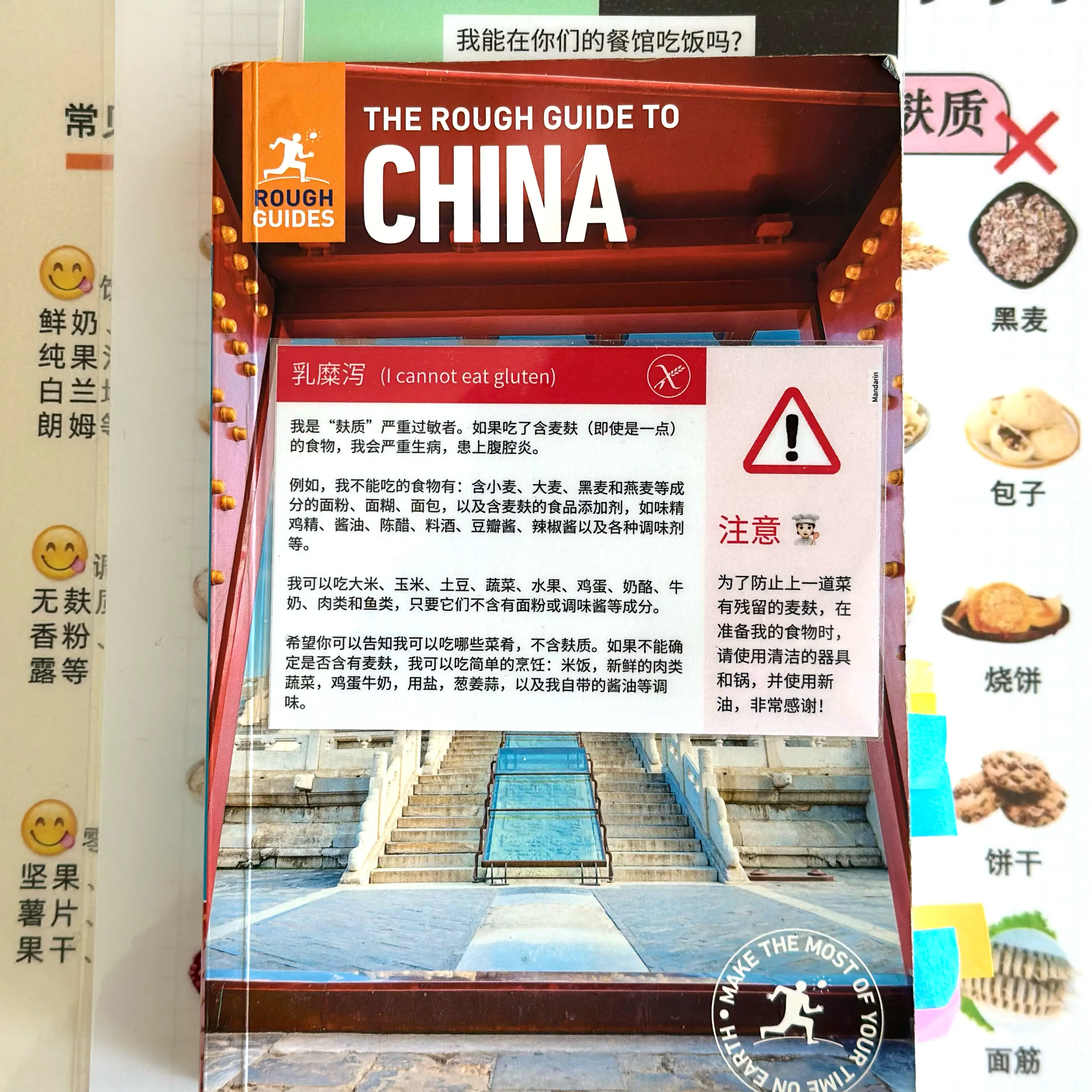
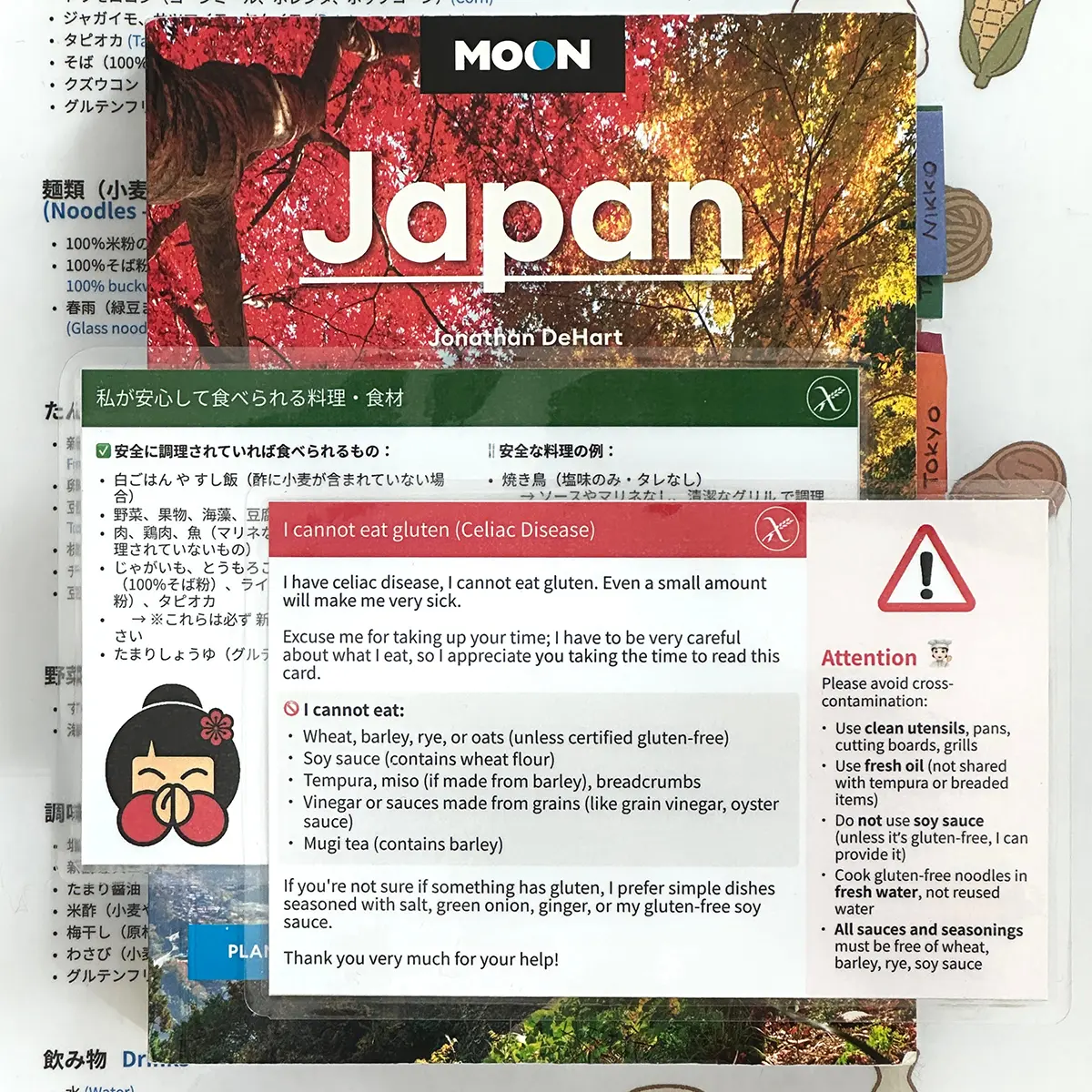
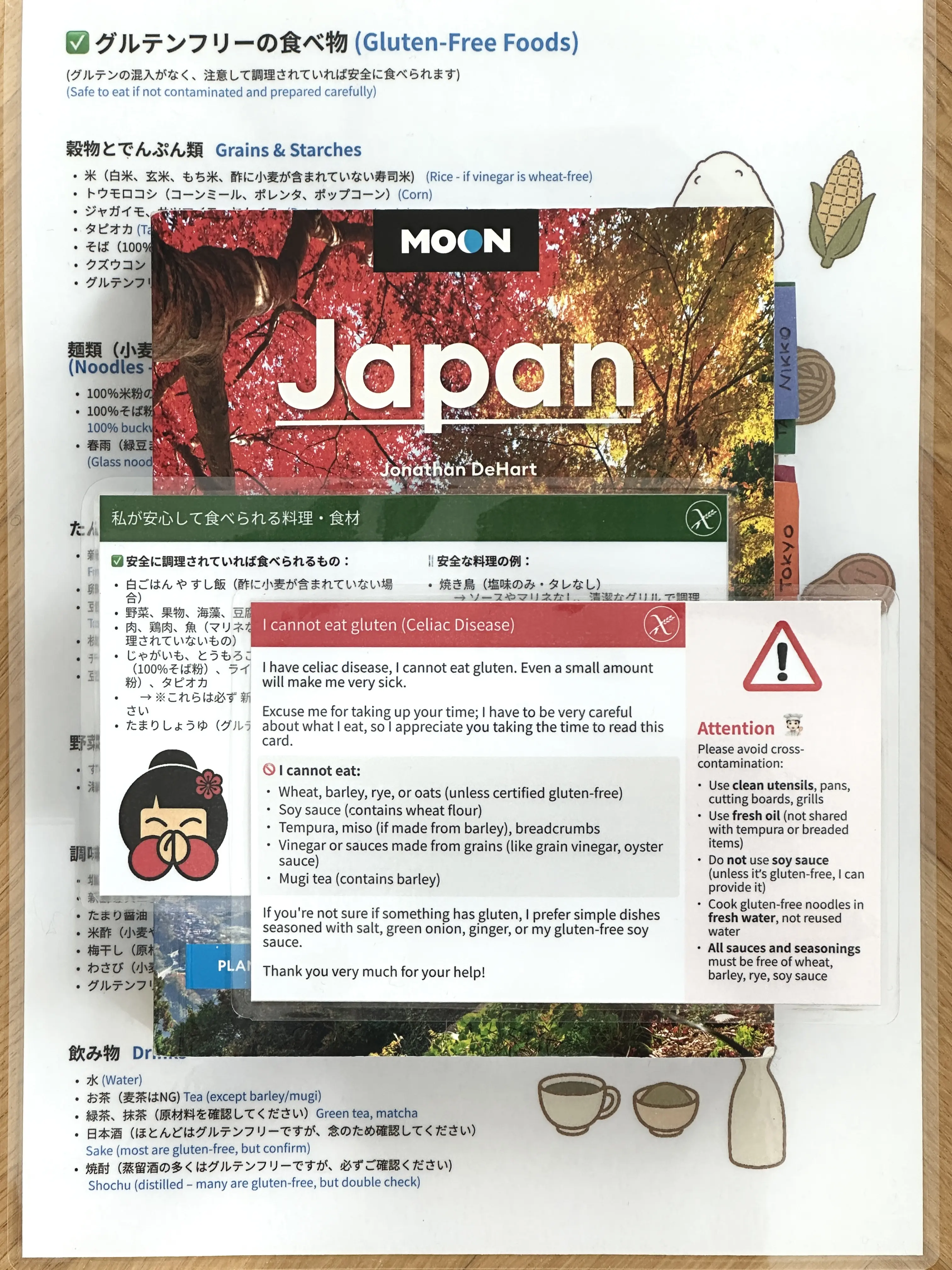
- Prepare a restaurant card in English + the local language explaining cross-contamination risks. I’ve designed several for different destinations, all available on my blog.
- Check restaurants ahead of time using Google Maps, travel blogs, and the app FindMeGlutenFree. For inspiration, you can browse all my favorite gluten-free spots on Instagram, my FMGF profile, and my saved Google Maps list.
What to pack
- Gluten-free snacks (sweet + savory, single-serve packs).
- Gluten-free soy sauce if you’re traveling in Asia.
- Probiotics if your stomach is sensitive (they won’t solve celiac issues, but can help with other digestion problems). I use Lactibiane Voyage 20M.
- Medical certificate (optional). Some airlines (like EasyJet) may allow an extra carry-on for celiacs if you ask in advance.
Eating out
- Keep it simple: choose dishes with few sauces/condiments.
- Avoid fried foods (yes, even fries!) unless cooked in fresh, separate oil.
- Double-check everything. Don’t assume your dish is safe, even if you asked before.
- Ask “trick questions” (like if regular bread is gluten free) to see if staff really understand celiac disease.
On the go
- Pre-order gluten-free meals on flights (at least 72h in advance). Always bring backup snacks.
- Check every packaged item. Not all chips, sauces, or snacks are gluten free, even if they look safe.
Myths & Red Flags
- Gluten-blockers? Don’t trust them. Celiac associations (including AOECS) don’t recommend products like Gluteostop. They don’t replace a gluten-free diet.
- Soy sauce & vinegar confusion:
- Many soy sauces are “technically” gluten free (under 20ppm), but wheat-based ones can’t be labeled safe. “Fermentation is not official method to remove gluten” (source: Finnish Celiac Association).
- Vinegars are usually fine, except malt, barley, and wheat vinegar.
Being celiac doesn’t mean giving up on restaurants or adventures. It just means organizing yourself with a little extra care.