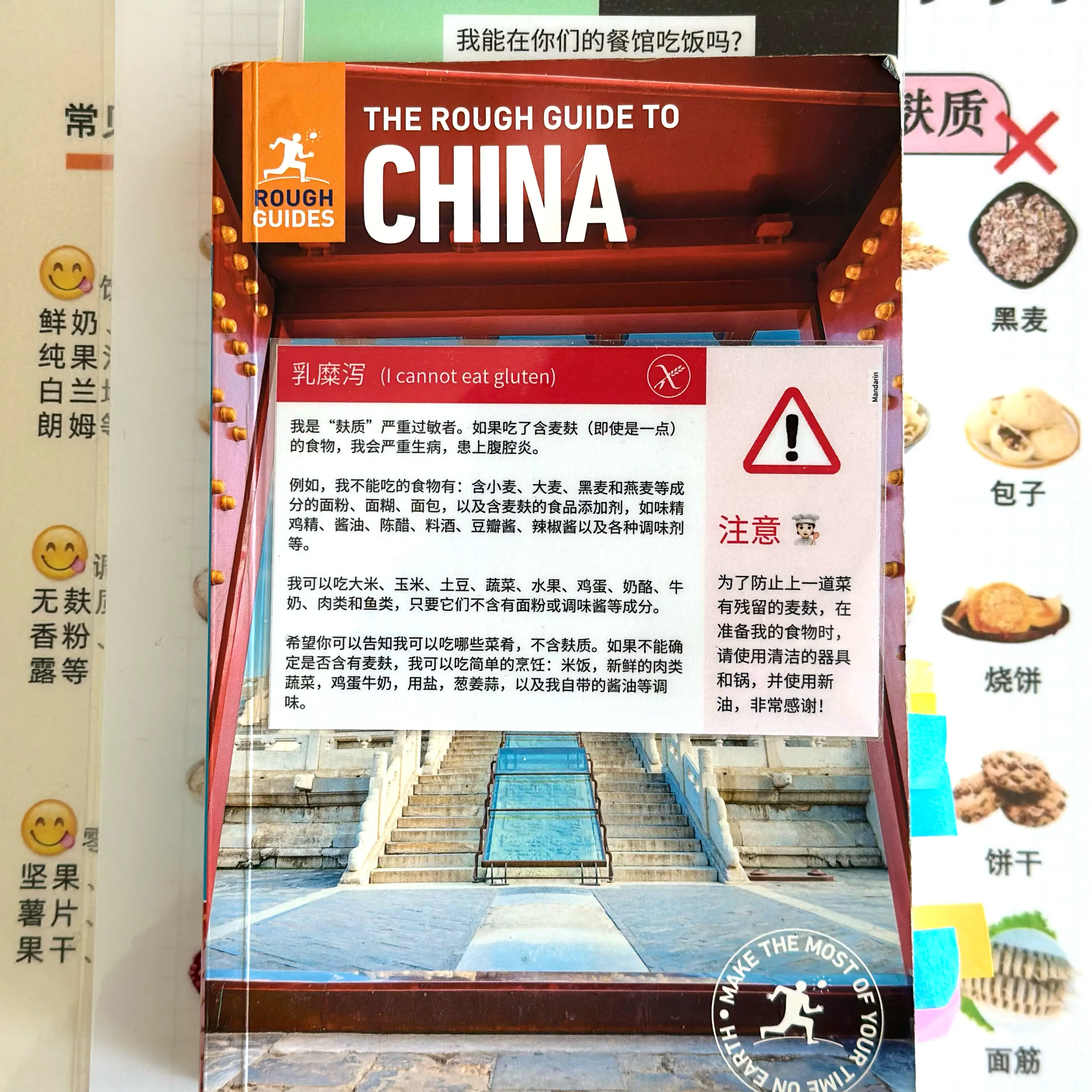
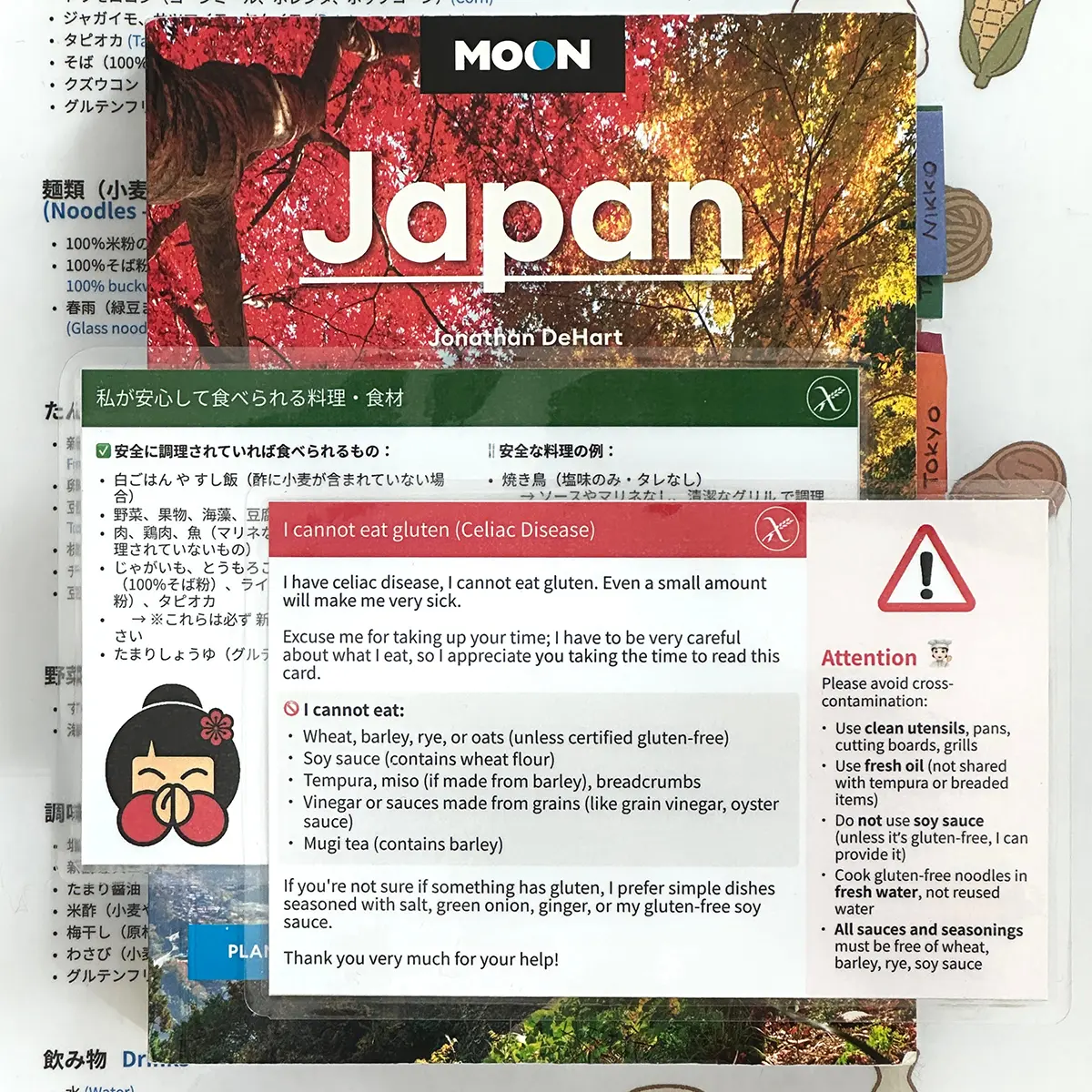
Getting all set for my trip to Bhutan, I put together a restaurant card explaining my celiac disease – what ingredients I can eat and how my meals need to be prepared safely. The card is in both English and Dzongkha, the official language of Bhutan, so I can hand it straight to restaurant staff and chefs wherever I go.
Translation provided by Sonam, a third-year Food Science and Technology student at Royal University of Bhutan and native Dzongkha speaker. Thank you, Sonam!
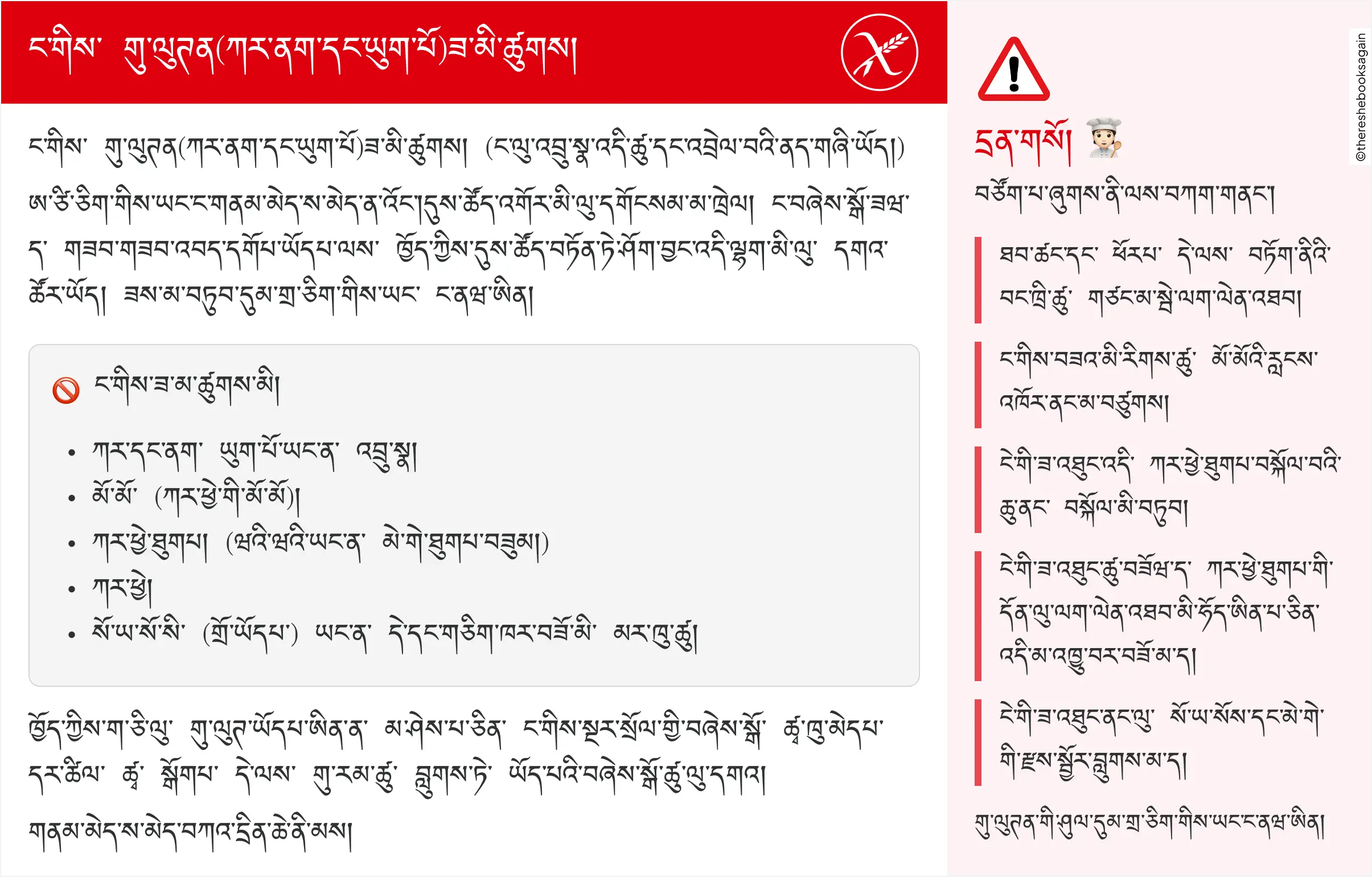
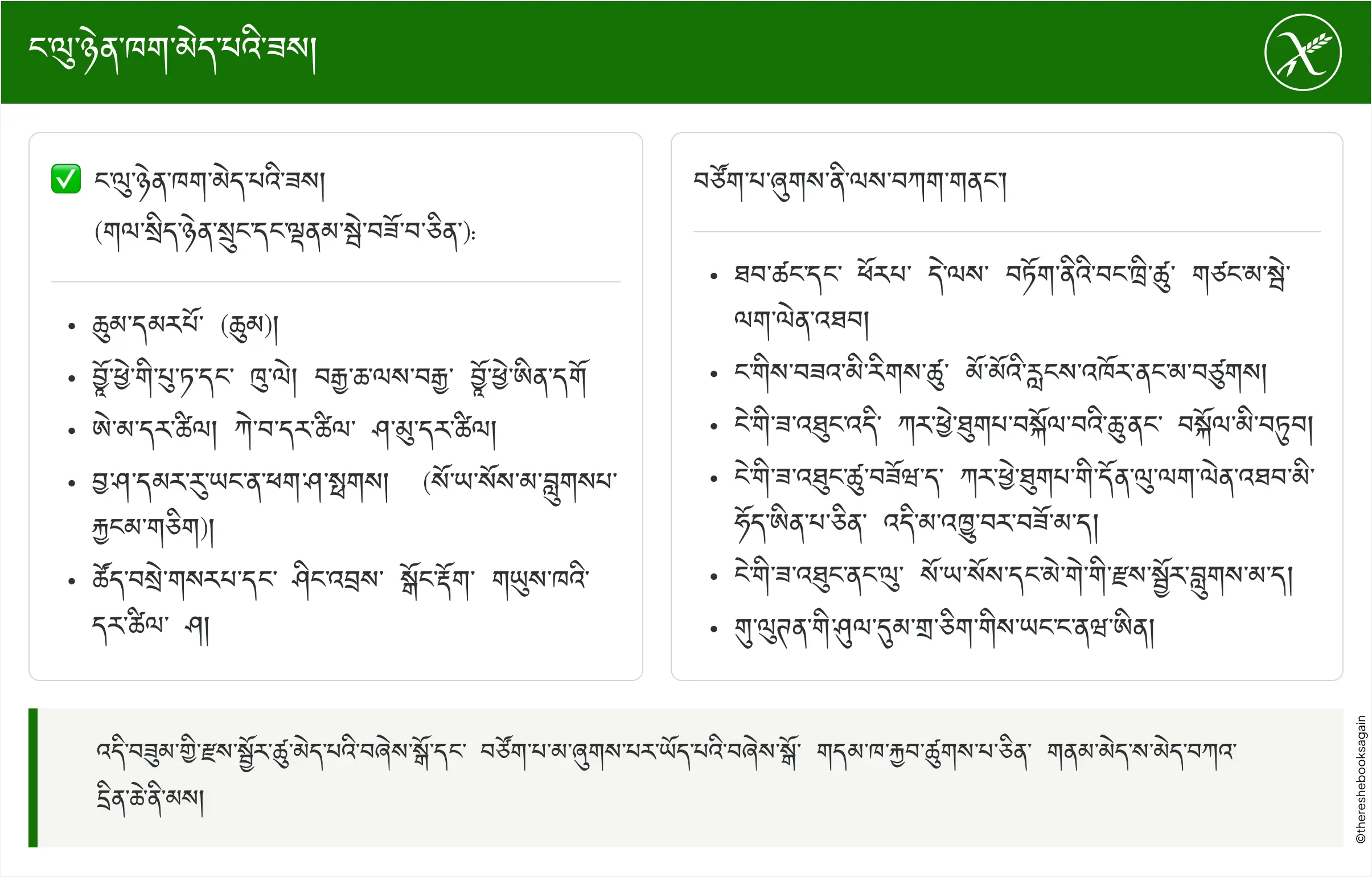
Printable Card Dzongkha / English Restaurant card + safe & unsafe ingredient list
Gluten-free in Bhutan: how it went
Bhutan turned out to be one of the easiest countries I’ve travelled in as a celiac. Traditional Bhutanese cuisine is based almost entirely on red rice, buckwheat and chilli, no wheat by default. The card was useful, but most people in the tourism industry already knew what celiac disease was without much explanation needed.
A few things worth knowing:
The baseline is good. Ema datshi (chilli and cheese), red rice dishes and most traditional mains are naturally gluten-free. The main risks are Momo (dumplings) and anything that might use soy sauce, both easy to avoid once you flag it.
Buckwheat pancakes are on the breakfast menu at many hotels and guesthouses. Always worth asking, most places can make them and they’re genuinely good.
I don’t feel comfortable recommending specific restaurants since most menus can be adapted and the situation changes quickly. That said, two places I’d highlight without hesitation:
- Folk Heritage Museum restaurant, Thimphu. Entirely traditional Bhutanese cuisine served family-style at a large central table with unlimited refills. The kitchen was confident with celiac from the start and I could eat almost everything.
- Chimi Lhakhang Village homestay, Punakha. The host cooked the entire dinner gluten-free without any fuss. One of the best meals of the trip.
The card still earned its place, hand it over at every meal. But overall, Bhutan is a destination where celiac travel is genuinely manageable.